Quick cooking, not-too-expensive, and super satisfying, salmon fillets are a weeknight dinner slam dunk—and our go-to method for making them is pretty much un-mess-up-able.
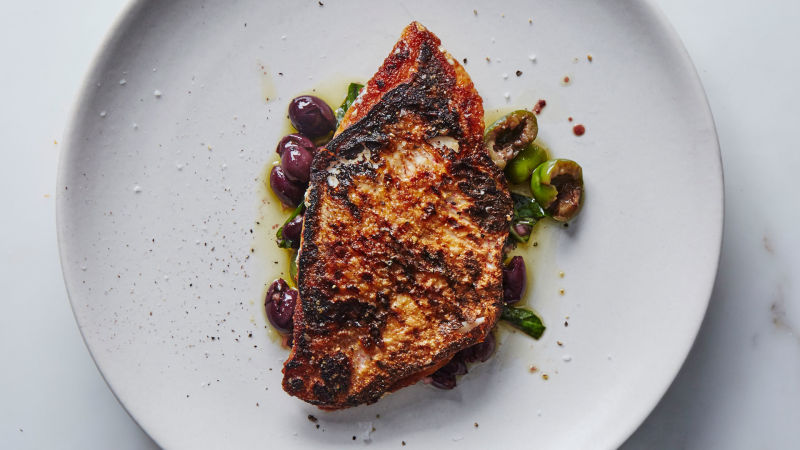
Pan-frying is best for thinner fillets and steaks, or for whole fish that are no more than 1 inch thick. Season the fish with salt and pepper and other seasonings such as chopped fresh herbs or crushed spices as desired. For skinless fillets, heat a heavy sauté or frying pan until quite hot; add just enough oil, clarified butter, or a mix of oil and whole butter to cover the bottom of the pan. Carefully add the fish and cook over medium-high heat for 3 minutes (4 to 5 minutes for whole fish) and then turn. Cook for another 3 minutes and test for doneness. Remove the fish from the pan when it is just slightly underdone, as it will continue cooking in the residual heat. When cooking fish with skin, add more fat to the pan, about 1/8 inch deep. Put the fish into the pan skin side down. The skin will shrink while it cooks, pulling the fish up from the bottom of the pan. To keep the skin next to the hot pan (which is necessary to crisp it), weigh the fillets down with a foil-wrapped skillet that is slightly smaller than the one used for the cooking. This will hold the fillets fl at and ensure even crisping of the skin. Cook the fillets on their skin for the majority of the time, about 5 to 7 minutes, depending on their thickness, then turn them and cook on the flesh side for just another minute or two, or until done. Remember that the pan must be quite hot before the fish is added; this will keep it from sticking. Also, don’t crowd the fish or it will sweat and give off liquid, ruining any chances of browning and crisping. Lastly, don’t overcook the fish. A quick pan sauce can be made aft er you have removed the fish and poured off the cooking fat. Add tomato sauce to the hot pan and stir in all the brown bits left on the pan for added flavor, or deglaze the hot pan with wine or lemon juice and finish with a swirl of butter or extra-virgin olive oil and a handful of herbs. Add a handful of toasted nuts for flavor and texture. The striped bass fishery, once endangered, has fully recovered and is now flourishing. This fish is especially delicious with its skin left on and sautéed until brown and crispy.
If the idea of cooking skin-on fish makes you nervous, do this in an ovenproof nonstick pan. The skin won’t get quite as crisp, but you won’t have to worry about it sticking.
Shopping for fish can be intimidating. Maybe it’s the fact that half of them are staring at you from behind the counter, as if to say, “Jeez, how did I end up here? “ So, if you’re going to do them—and yourself——justice, here’s how to rustle up a fine, fresh fillet. You need to use your eyes and your nose. Look for a cut where the flesh is moist and glistening, with no flat, brown edges. If the fish looks dull, take a pass. Same goes for any fillet with a fishy or ammonia smell. Don’t be shy about asking your fishmonger a few questions, like when the fish came in and from where. Most stores have regular shipments; knowing that schedule in advance can help you plan when to have fish. If black cod were in a band, it would be the bass player: steady, meaty, but not much of a soloist. It benefits from some jazzy front men and especially likes to swing with citrus high notes. You’ll find plenty of those riffs in this dish.
Just about any type of fish can be baked, whether whole, cut into steaks, or filleted. Season the fish with salt and place it in an oiled baking dish or on an oiled rimmed baking sheet; the fish may give off some liquid as it bakes so it is best to use something with sides. Bake fillets and steaks in a hot oven, about 425°F. Whole fish, which will take longer to cook, should bake in a 375°F oven. Most fillets are done when they are just cooked through at the center, the flesh opaque but still moist. Some exceptions are tuna, albacore, and salmon, which are much tastier when cooked medium rare with the flesh still translucent in the center. When cooked on the bone, whole or in steaks, all types of fish need to be cooked until the flesh can be lift ed from the bones, but just to this point and no longer. It is important to not overcook fish or it will become dry and tough. Fillets cook fairly quickly: depending on the thickness, they take from 7 to 10 minutes. A good gauge for cooking whole fish is 10 minutes per inch of thickness measured at the thickest part of the fish. Whole fish can be slashed diagonally to the bone to speed up the cooking. These are only rough guides and you should check the fish oft en while it is cooking to judge its doneness. Gauge the doneness by pushing in the flesh with your finger. It will feel soft when underdone; as it cooks and sets it will begin to feel a bit springy. Don’t hesitate to cut into it to know for sure. Besides a basic seasoning of salt, you can add a splash of wine and a drizzle of extra-virgin olive oil or a pat of butter for more flavor and moisture. The fish also can be infused with a marinade before baking; marinades can be made from herbs, spices, citrus zest and juice, and olive oil. Fillets and steaks can be painted or smeared with Pesto (page 230), Chermoula (page 233), or other flavorful sauces before they are slipped into the oven. Wrap whole fish or fillets in aromatic fig or grape leaves or in branches of lime, lemon, or fennel so the leaves can perfume the fish and help trap moisture. Fish can also be baked in a juicy sauce such as a tomato sauce, seasoned sautéed onions, or a vegetable ragout. Add 5 minutes or so to the cooking time when baking fish in sauce. Salmon fillets have easy-to-spot pin bones—a row of thin white rib-like bones that extends from behind the gills to the fish’s midsection. Rub your fingers over the flesh to locate these bones; use a pair of needle-nosed pliers to pull them out of the flesh.
Fish and shellfish are superb grilled. The searing heat quickly seals in juices and delicately perfumes the flesh with smoke. Fish can be grilled as fillets, as steaks, or whole. Shellfish such as scallops and oysters can be grilled in the shell or shucked. Shrimp can be grilled peeled or unpeeled. All these are delicious seasoned with nothing more than salt and pepper and a squeeze of lemon, but advance marinades of olive oil and herbs, tangy salsas such as the peach (page 231) or tomato (page 231), and Herb Butter (page 48), Béarnaise (page 229), or warm butter sauce (page 228) are also possibilities. A hot fire is best for everything except large whole fish. Use the hand test: you should be able to hold your hand an inch or two over the grill for no more than 2 seconds. The grill should be preheated, cleaned, and, most importantly, oiled, just before putting on the fish, to help keep it from sticking. Season fish fillets and steaks with salt and pepper and brush them with oil before putting to grill. Or marinate them with a combination of herbs, spices, citrus zest, and olive oil. Let fish sit in a marinade for at least an hour to allow the flavors to penetrate. An average fillet about an inch thick will take 6 to 8 minutes to cook. If the skin has been left on (it gets crispy and delicious cooked on a grill), place the fillet skin side down and cook it mostly on the skin side. Check for doneness after about 6 minutes, and turn at the last minute to sear the other side. A fillet without the skin should be cooked 3 to 4 minutes on each side. Rotate after about 2 minutes to make crosshatched grill marks. Check for doneness after about 6 minutes, and turn at the last minute to sear the other side. To test, press on the flesh with your finger or a spatula, or probe the flesh with a knife. The fish is done when the meat is just set and slightly firm to the touch but still moist. Fish such as salmon and tuna are delicious seared on the outside and very rare inside, still shiny and translucent. Remember that the fish will continue to cook after it is taken off the grill. If cooked for too long, fish can become quite dry. A fish steak is a cross-section at least 1 inch thick that contains some backbone and is surrounded by the skin. Grill the same way as a skinless fillet, but turn it after 5 minutes and check for doneness after 8. Check by feel or by cutting into the flesh near the backbone to see inside. The flesh should separate easily from the bones but still be quite moist. A whole fish should be scaled and gutted; any fishmonger will do this. Cook the fish whole and unboned, with its head on, if possible; the fish will be more succulent. Season well with salt and pepper or marinate as described above, turning the fish now and then in the marinade. Cook smaller fish like anchovies and sardines over a hot fire, threaded on skewers for easy turning. (I love fresh anchovies marinated with a little chopped mint and grilled over a searing hot fire.) Trim off the fins and the tail-ends of larger fish (kitchen shears make short work of this chore). The belly cavity can be stuffed with lemon slices and herbs. Because they take much longer to cook, big fish need a medium-hot fire. To turn over a big fish on the grill, gently roll it as often as necessary to keep the skin from burning. Measure the fish at its thickest point and allow about 10 minutes per inch. A good friend of mine catches big fish, cleans and scales them, and grills them wrapped entirely in fennel fronds or herb branches, or sometimes in tender leafing branches from his lemon tree, tied in place with wet string. This overcoat of greenery steams and perfumes the fish and they taste divine. Whole fish are done when the flesh easily separates from the bone. If tied up in greenery, unwrap it, and gently separate the fillets from the central backbone, picking out any rib bones that come off with the fillets. Shucked scallops, oysters, squid, and shrimp (peeled or ...
Learn how to make salmon en papillote (parchment paper salmon) with spring vegetables and a bright lemon-dill vinaigrette for an elegant, fuss-free meal.
Ask your fishmonger to fillet the fish for you, remove the skin and pin bones, then hack up the bones. That’s why they’ve got the waterproof apron and stainless steel equipment back there, right? The size of the individual whole fishes doesn’t matter—just make sure you have about 7 pounds total.
When it comes to achieving that perfectly cooked fillet with flawlessly crisped skin—so seemingly effortless when served at a restaurant—something usually goes wrong. The fish sticks. The skin rips. The flesh overcooks. But when you master this simple and reliable technique you’ll never go out for fish again.
You asked for it…they noodled. Brad and special guest Matty Matheson head down to Oklahoma to catch catfish with their bare hands. Join Brad and Matty as they search for catfish in dangerous, murky wourder with their new best friend and professional noodler Skipper Bivins. Screaming, sea monsters, and giant snakes galore. Watch them get literally in over their heads and stay tuned for Part 2 where they’ll cook up the fish they noodled.
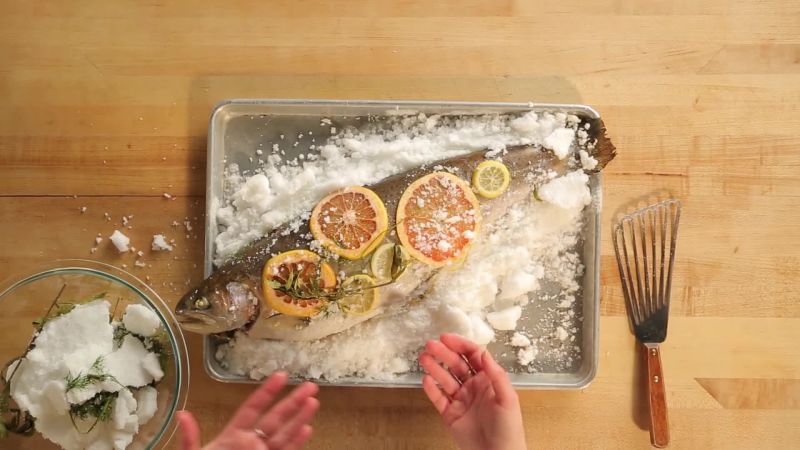
There’s no centerpiece quite as dramatic than a salt-baked fish. It’s all about making a tight seal with the salt crust—it forms a mini-oven around the fish, keeping the flavors of the aromatics inside. Add just enough water to the salt until it feels like very wet sand. To test it out, pack a little in the palm of your hand; if it holds its shape without cracking, you’re good to go. (If not, add more water.)
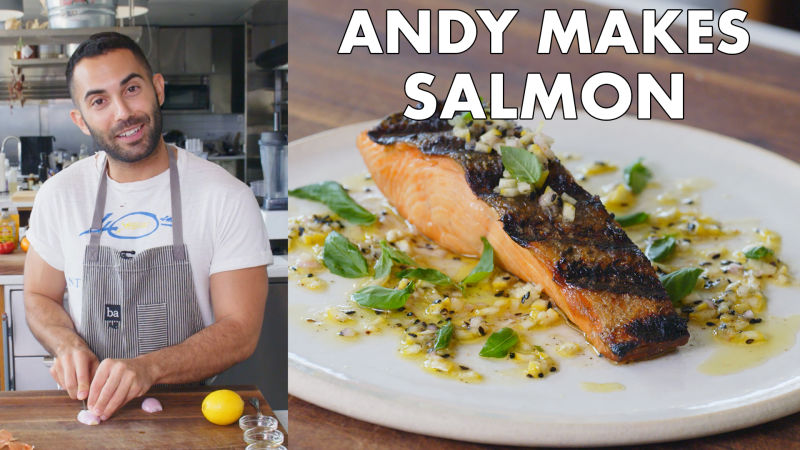
Learn how to grill salmon with the Test Kitchen's Andy! For this lemony grilled salmon recipe, you absolutely want to cook fish that still has its skin on. It protects the fish while it grills and, despite what you think or have been told, will help it release from the grill grates more easily.
Check out the recipe here: https://light-body.today/recipe/grilled-salmon-with-lemon-sesame-sauce%3C/div%3E%3C/div%3E%3C/div%3E%3C/div%3E%3C/div%3E%3C/div%3E%3C/div%3E%3Cdiv class="StackedRatingsCardWrapper-RIFgn jsPKbl SummaryCollectionGridSummaryItem-ilztYA cpHIzM search_result_item-6a217c4199f59ee335958d68">
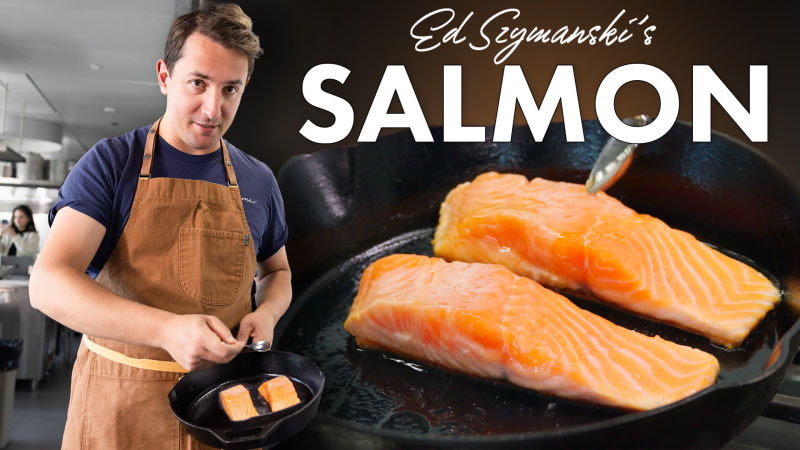
Learn how to make perfectly crispy-skinned pan-seared salmon at home with chef Ed Szymanski in the Bon Appétit Test Kitchen. Learn how to choose the freshest salmon and master getting ultra-crispy skin without overcooking your fish. Served with a rich lemon caper brown butter sauce and Dijon spinach, this easy salmon recipe is a foolproof weeknight dinner that's ready in about 20 minutes.
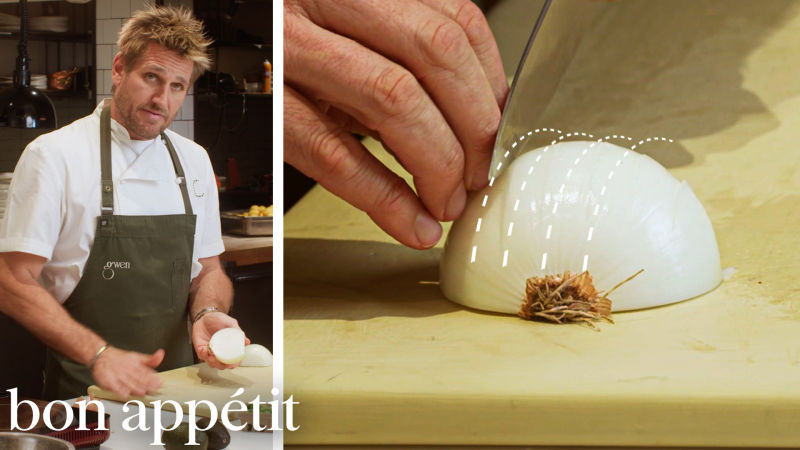
Learn 67 essential kitchen tips with Chef Curtis Stone, from choosing a perfect rib eye to cutting onions, prepping vegetables, shucking oysters, making vinaigrettes, storing truffles, organising your kitchen, and refining knife skills. This chef-driven guide covers beef, seafood, herbs, cheeses, dressings, and everyday techniques to help you cook smarter, cleaner, and more confidently at home with professional results.