This recipe looks more daunting than it actually is. You basically make a bread dough with a bit of butter and egg in it, knead it for a while, the leave it alone to do its thing.
What could be more appealing on a weekend than to fill the kitchen with the good smell of bread baking? I like to start my bread dough when I get up, and for lunch I reward myself with a fresh-from-the-oven pizza. Perhaps I’ll share a baguette over dinner with friends, and have some mini-loaves to put in the freezer and enjoy in the weeks ahead—all made from the same dough. If there are children around, I announce what I’m up to, and invariably they will want to join me and pitch in. For them, there is something magical about making bread-the way it rises quietly in a bowl under a cover, the fun of punching the dough down, forming the loaves, and creating steam in the oven just before baking. To say nothing of how good it tastes. I started baking bread in the sixties, when I persuaded Julia Child to work out a recipe for French bread that could be baked in an American home oven. In those days, it was almost impossible to buy a crusty baguette. Now there are artisan bakers all over who have mastered the techniques, and there’s really no need to bake one’s own. But it is such fun.
Editor's note: To make your own sourdough starter, follow Beranbaum's instructions.
This bread is as homespun as bread can get, using a stiff sourdough starter cultivated from wild yeast. It has a characteristic sourdough profile: tangy, complex flavor; thin, crisp crust; and springy moist crumb with uneven holes of moderate size.
I love this small loaf because of the size of the whole slices when cut. Also, for those who may have just one banneton (dough-rising basket), I wanted to provide a recipe for just one loaf. A loaf of this size is ideal for two people for three days, with a few slices to share with anyone who comes by to visit. If your family is larger, you will want to double the recipe.
Sharing the sourdough starter for bread is a time-honored tradition around the world. I got my first starter from Kurtis Baguley, a baker in San Francisco. And when my friend Angelica Pulvirenti asked me for a bread recipe to use on her boyfriend's boat, one that was easy and had good keeping qualities (so it wouldn't mold from the humidity), I gave her this recipe and some of my starter to make it. She was especially delighted because sharing a bread starter was a long-standing custom in a small village near Ragusa, Sicily, where she grew up. She said that her mother, at the end of baking day, always passed some of her unbaked bread dough to her friends. She loved the sense of community this imparted and is thrilled that she and I are continuing it.
TIME SCHEDULE
Stiff Sourdough Starter: minimum 13 hours, maximum 34 hours Minimum Rising Time: about 9 hours Oven Temperature: 475°F, then 450°F Baking Time: 25 to 30 minutes
The secret behind many great breads is something called a preferment, a portion of the dough that ferments separately from (and for more time than) the rest of the ingredients. A preferment increases the strength of your dough (improving its final crumb structure) and contributes to aroma and flavor. In baker Bryan Ford’s cookbook New World Sourdough, the preferment is a sourdough starter; in this recipe, however, his preferment is the lower-maintenance poolish—a mixture of flour, water, and active dry yeast that grows overnight. Mix the poolish with more flour, water, and yeast as well as a touch of olive oil, sugar, and salt, and you get a resilient, flavorful dough that can be used in a nearly infinite number of ways. This is an instance when you really do need a kitchen scale—Ford encourages all bakers, especially beginners, to use one. The master dough can also be scaled up or down as desired.
When I have the urge to bake bread on a weekend and want something not quite so time-consuming as French bread, I often make this loaf. It is a healthy bread with a good texture and makes particularly delicious sandwiches. It is also great toasted for breakfast.
Brighten up your holiday party with this Monkey Bread recipe!
Get the recipe here: https://light-body.today/recipe/monkey-bread%3C/div%3E%3C/div%3E%3C/div%3E%3C/div%3E%3C/div%3E%3C/div%3E%3C/div%3E%3Cdiv class="StackedRatingsCardWrapper-RIFgn jsPKbl SummaryCollectionGridSummaryItem-ilztYA cpHIzM search_result_item-6a9fd01ee63e60afce265a05">
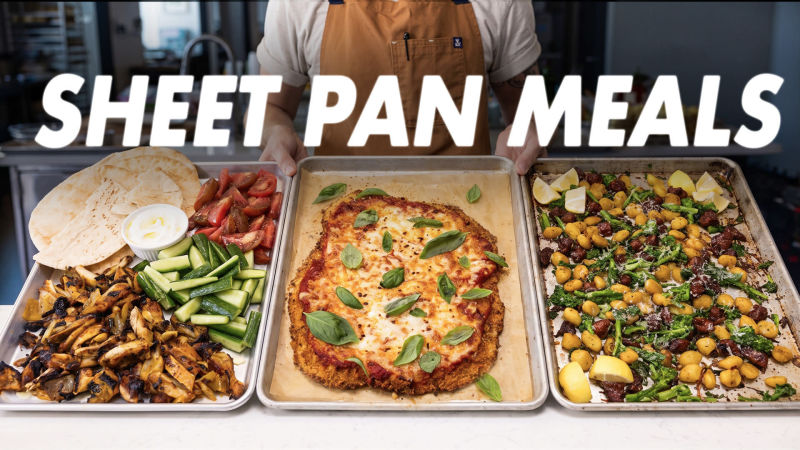
Bon Appétit’s Jesse Szewczyk shows how to get the most out of your oven with three sheet pan dinners designed for every rack. Learn how to use the bottom rack for crispy, oven-fried chicken parm, the middle rack for perfectly roasted gnocchi with sausage and broccoli rabe, and the broiler for smoky, charred shawarma-spiced chicken. Use Jesse’s tips and techniques to unlock your oven’s full potential and make your weeknights a little easier.
Feeling inspired? You can follow these recipes here:
Chicken Parm: https://light-body.today/recipe/a-really-big-chicken-parm
Sheet Pan Gnocchi: https://light-body.today/recipe/sheet-pan-gnocchi-spicy-sausage-broccoli-rabe?_sp=36d48b46-a52f-431b-9818-bb9820bd4945.1786372123359
Chicken Shawarma: https://light-body.today/recipe/sheet-pan-shawarma-spiced-chicken
Discover more of Chef Skylar's recipes here: https://diningwithskyler.com/
Learn how to make the perfect brioche French toast with chef Neil Kleinberg of Clinton Street Baking Company. Discover the restaurant secrets behind custardy French toast, from thick-cut brioche and balanced batter to caramelised bananas and rich maple butter for a delicious brunch recipe at home.
Failure, heartache, and heartbreak are what it takes to create a new take on a classic recipe. Join Rachel Gurjar in the Bon Appétit Test Kitchen as she spends two days creating the perfect cheesy cornbread–a recipe that took 80 servings to get right.
You can check out Rachel's upside-down cornbread recipe here: https://bonappetit.com/recipe/upside-down-cornbread
Produced by Basically with Krusteaz | We're going back to basics on a breakfast favorite. Grab your griddle and try these tips next time you're having Weekend Pancakes.
To learn more, visit Krusteaz.com